
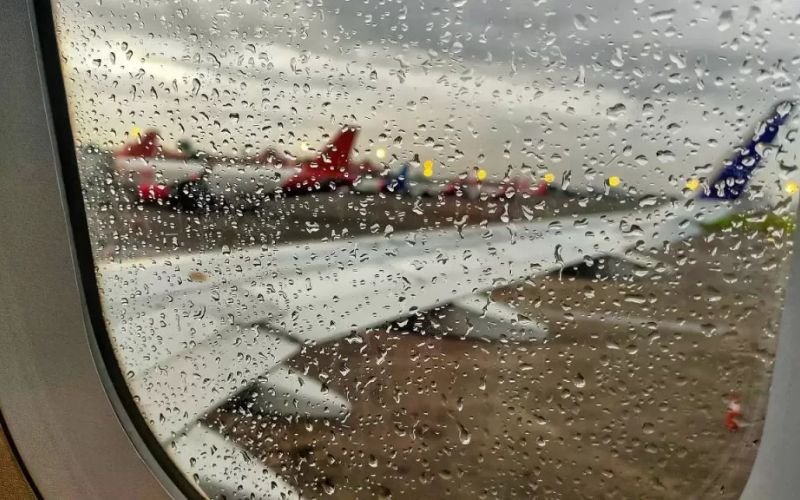
Rain does not usually prevent a plane from taking off, as it is one of the most common weather conditions pilots and airports deal with. Commercial aircraft are designed and certified to operate safely in wet weather, and pilots are trained to handle rainy conditions. In most cases, the bigger concern is not ‘can planes take off in the rain?’ itself but the weather that may come with it, such as thunderstorms, strong winds, poor visibility, wind shear, or standing water on the runway.
Airports and airlines monitor these conditions closely before takeoff. If the downpour is heavy enough to affect visibility, runway safety, or aircraft performance, a flight may be delayed or canceled. Otherwise, planes can safely take off and fly in the rain.
How Planes Handle Rain During Takeoff
Rain mainly affects an aircraft on takeoff by reducing runway friction, which can lengthen the takeoff roll and increase the risk of hydroplaning, while having only minor effects on engine performance and wing lift. Modern commercial planes are designed to handle these conditions.
Engine Water Ingestion
Jet engines are designed and tested to operate safely when water enters the engine during heavy showers. During certification, aircraft engines undergo tests that expose them to large amounts of water to make sure they can continue operating safely. So, normal rain does not cause a jet engine to stop working.
Aerodynamics and Lift
Rain can have a small effect on the airflow over an aircraft’s wings. Water hitting the wing can increase drag and reduce lift.
Aircraft performance calculations already account for wet-weather conditions. As a result, normal rain does not prevent a commercial aircraft from generating the lift it needs for takeoff.
Pavement Conditions
Water on the runway reduces tire grip and can increase the risk of hydroplaning. Pilots use wet-runway data to adjust takeoff calculations, while runway grooves and aircraft tires help maintain traction and safe braking.
Visibility and Cockpit Technology
Pilots may find it difficult to see outside the cockpit during heavy rain, but aircraft are equipped with a number of devices to help them function in bad weather.
In order to protect the pilots’ vantage point, aircraft windshields are made to withstand rain at high speeds and may include wipers or other rain removal devices. More significantly, commercial aircraft include navigation systems and flight instruments that enable pilots to fly safely without depending solely on what they can see outside.
How Pilots See in Heavy Rain?
Rain can make it harder to see outside the cockpit, but aircraft have systems that help pilots maintain a clear view and operate safely.
- Windshield wipers: Aircraft use specially designed wipers to clear rain from the windshield.
- Rain removal systems: Some aircraft use air systems to help remove water from the windshield.
- Flight instruments: Pilots can rely on instruments, navigation systems, and air traffic control when outside conditions are difficult to see.
- Instrument Flight Rules (IFR): IFR allows pilots to operate safely in low-visibility conditions without relying only on what they can see outside.
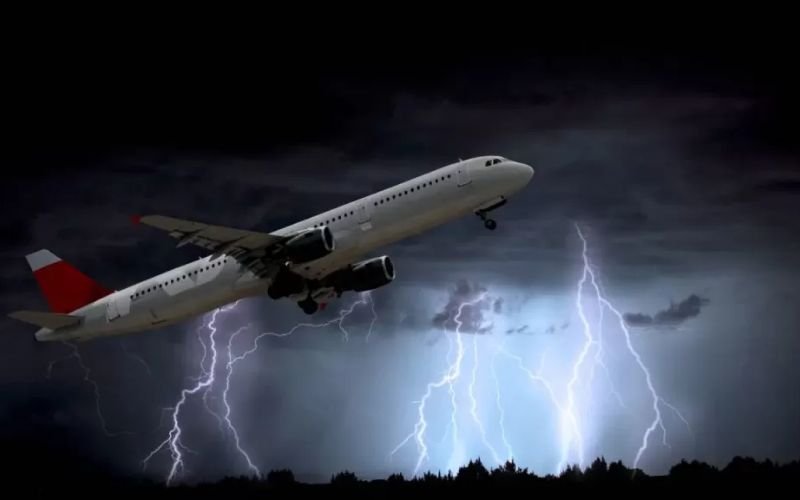
Why Do Delays Happen If Rain Isn’t the Only Problem?
Delays are more often caused by the other weather conditions that can come with heavy rain, especially during thunderstorms.
Reduced Visibility
Heavy rain can reduce visibility on and around the runway. Airports use runway visual range (RVR) measurements to determine how far pilots can see along the runway.
If visibility falls below the required minimum for a particular departure, the takeoff may be delayed until conditions improve.
Wind Shear and Microbursts
Thunderstorms along with downpours can produce sudden changes in wind speed and direction. These conditions are known as wind shear and can be dangerous during takeoff and landing.
A microburst is a powerful downdraft that spreads outward after reaching the ground. If one is detected near the runway, pilots may wait until it passes before taking off.
Freezing Rain
Freezing rain can create a serious safety issue because it may form ice on the aircraft’s wings and other surfaces. Ice can reduce lift and affect how the aircraft handles.
When freezing precipitation is present, the aircraft may need to be de-iced before takeoff. During severe conditions, the flight may be delayed until it is safe to depart.
Lightning and Ground Operations
Lightning can also cause delays, even when the aircraft itself is capable of flying in the rain. When lightning is nearby, airports may temporarily stop certain ground activities to protect workers.
This can affect baggage handling, fueling, aircraft loading, and pushback from the gate. Even a short interruption in ground operations can lead to delays that continue throughout the airport’s flight schedule.
How Pilots and Airlines Decide Whether to Take Off
Before departure, pilots and airline dispatchers check the weather and runway conditions to make sure the flight can operate safely. They consider:
- Rain and wind
- Pavement situation
- Thunderstorms
- Weather warnings
- Aircraft weight
- Available runways
If the situation is unfavorable, they may wait for the weather to improve, choose another runway, reduce takeoff weight, or delay the flight. Air traffic control may also slow or temporarily stop departures during severe weather.
How Does Rain Affect Runways?
A wet runway can reduce tire grip and make braking less effective. Pilots and dispatchers consider these conditions when calculating whether there is enough runway for a safe takeoff.
Key factors include:
- Reduced tire grip: Less friction can increase stopping distance.
- Wet runway calculations: Takeoff data accounts for wet conditions.
- Standing water: Excess water can reduce tire contact with the runway.
- Hydroplaning: Tires may lose contact with the pavement, affecting braking and steering.
- Runway drainage: Grooves and drainage systems help remove excess water.
- Excess water: Airport authorities may restrict operations if the runway becomes unsafe.
How much rain is OK to fly in?
There is no single rainfall amount that automatically makes flying unsafe. Commercial aircraft are designed to operate in rain, and light to moderate rain is generally not a problem when visibility, wind, and other weather conditions remain within safe operating limits.
The bigger concern is often what comes with the rain. Heavy downpours can reduce visibility, create standing water on runways, and increase the risk of thunderstorms, strong winds, turbulence, or wind shear. In these situations, flights may be delayed, diverted, or cancelled even when the rain itself would not prevent the aircraft from flying.
| Rain Conditions | Typical Impact on Flights |
| Light rain | Usually little to no impact |
| Moderate rain | Generally safe, but may reduce visibility |
| Heavy rain | Possible delays due to visibility and runway conditions |
| Torrential rain | Greater chance of delays, diversions, or cancellations |
| Rain with thunderstorms | Can significantly disrupt flights |
Why Pilots Avoid Thunderstorms?
Planes avoid thunderstorms because thunderstorms can contain several hazards at the same time, including:
- Severe turbulence: Strong updrafts and downdrafts inside a thunderstorm can cause sudden changes in altitude and airspeed.
- Lightning: Aircraft can safely withstand lightning strikes, but thunderstorms still contain other more serious hazards.
- Hail: Large hail can damage the aircraft’s windshield, wings, engines, or other surfaces.
- Wind shear: Sudden changes in wind speed or direction can affect the aircraft’s performance and control.
- Heavy precipitation: Very heavy rain can reduce visibility and affect engine and aircraft performance.
- Strong updrafts and downdrafts: Air moving rapidly upward and downward can make conditions unpredictable.
- Storm growth: Thunderstorms can develop and change quickly, so pilots maintain a safe distance rather than trying to fly through them.
Conclusion!
So, the next time you’re on a plane and find yourself wondering, ‘Does planes take off in rain?’ the answer is yes. Planes can and do take off in rainy weather every day. Rain alone usually does not stop a flight. The bigger concerns are severe weather conditions that can come with rain, such as thunderstorms, strong winds, wind shear, standing water, and very low visibility. So, seeing rain outside the airport window does not necessarily mean your flight is in danger, delayed, or cancelled. If the weather and runway conditions are within safe operating limits, planes can safely take off and continue their journey.
Frequently Asked Questions
Rain alone does not usually cause a flight cancellation. Flights may be cancelled when heavy rain creates unsafe runway conditions or comes with thunderstorms, strong winds, flooding, or very poor visibility.
Yes, planes can safely take off in normal rain. Pilots check weather, runway conditions, visibility, and wind before takeoff to make sure conditions are within safe operating limits.
Yes. Flights normally continue to take off during light or moderate rain. Operations may slow down or stop temporarily if the rain becomes severe or creates unsafe conditions.
There is no single amount of rainfall that automatically cancels a flight. Airlines consider factors such as runway water, visibility, wind, thunderstorms, and overall weather conditions before deciding whether a flight can operate.
Planes can fly near areas affected by thunderstorms, but pilots generally avoid flying directly through severe thunderstorms. Strong winds, turbulence, hail, lightning, and wind shear can make these storms hazardous.
Yes, planes can take off in snow when the runway is properly cleared, and conditions meet safety requirements. Heavy snow, ice, or poor visibility can lead to delays or cancellations.
Rain associated with thunderstorms, strong winds, or unstable air can cause turbulence.5